
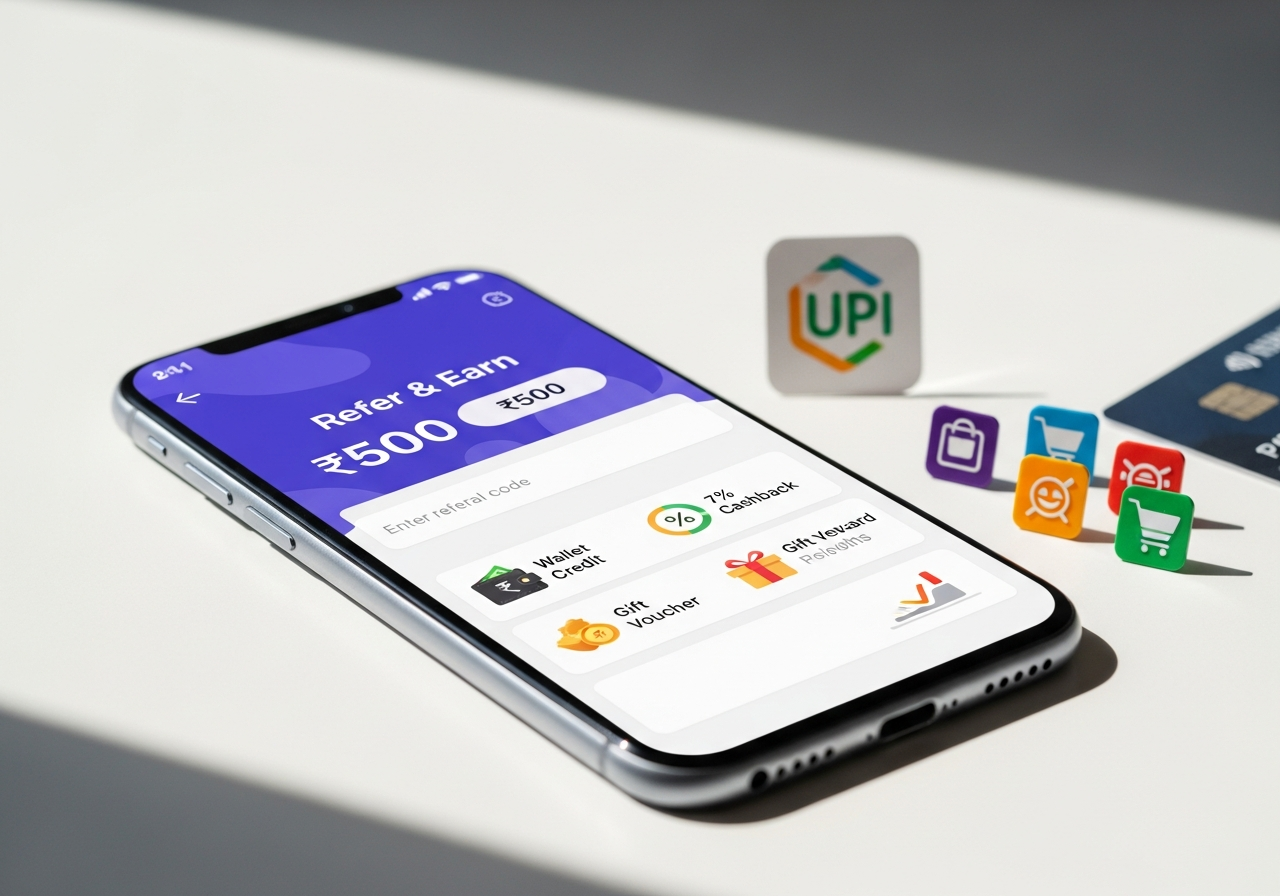
Referral bonuses worth ₹500 have become one of the most popular incentive programs across Indian apps and platforms. However, most users don’t realize that this ₹500 figure is rarely paid as direct bank cash. Instead, the reward usually arrives as cashback, wallet credit, reward points, vouchers, or trading credits—each with different spending rules and redemption timelines.
Whether the bonus actually reaches your account depends on several factors: whether you meet eligibility requirements, complete the qualifying first action, pass KYC or account verification, and stay within program-specific limits. Understanding these mechanics before you start referring friends will help you avoid disappointment and maximize your actual reward value.
What ₹500 Refer a Friend Bonuses Mean in India
A ₹500 referral bonus is a promotional reward offered when you share your referral link or invite code with a friend, and that friend completes certain actions on the platform. The critical thing to understand is that ₹500 is a marketing value, not always the amount you’ll see deposited into your bank account.
Most Indian apps and platforms use ₹500 as an aspirational headline to attract users. Behind that headline sits a specific payout structure that determines how, when, and in what form you receive the reward. Some platforms offer the full amount immediately; others spread it across multiple actions or lock it in a format you can only use within their app ecosystem.
Common Payout Forms: Cash, Cashback, Points, and Vouchers
| Payout Form | How It Works | Redemption Rules | Common Use Case |
|---|---|---|---|
| Direct Cash | Transferred to your linked bank account or UPI | Withdraw anytime after approval | Rare; usually limited to fintech apps |
| Cashback | Credit to app wallet; reduces future purchases | Spending requirement; expires after 30–90 days | Shopping, food delivery, UPI apps |
| Reward Points | Points equal ₹500 in value; 1 point = ₹1 or varies | Redeem for products, discounts, or vouchers | E-commerce, travel, loyalty apps |
| Gift Vouchers | Discount code or wallet voucher | Minimum spend often required; category-specific | Retail, dining, entertainment apps |
| Trading Credits | Account credit in investment or brokerage apps | Use for trading fees or buying securities | Fintech, stock trading, crypto apps |
The reason platforms use different formats is straightforward: it keeps reward money within their ecosystem longer, encourages repeat purchases, and reduces fraud risk. A ₹500 voucher tied to your account is less likely to be exploited than ₹500 in direct cash.
Why the Same ₹500 Offer Can Work Differently Across Apps
Two apps may both advertise “₹500 on referral,” but the experience can be completely different. A shopping app might credit your wallet immediately after your friend completes their first purchase, while a UPI app might require both you and your referred friend to complete five transactions each. A stock trading app might give you trading credits instead of spendable cash, valid only for brokerage fees.
These differences exist because each platform operates under different business models, regulatory frameworks, and fraud-prevention strategies. Financial apps face stricter compliance rules around cash disbursement and must verify identity more thoroughly. E-commerce platforms prioritize repeat customer acquisition, so they often lock rewards as cashback with a validity period. Service-based apps like food delivery or ride-sharing may require the referred user to meet a minimum spend threshold before the referrer receives their bonus.
Understanding your app’s specific model prevents confusion when your ₹500 bonus doesn’t arrive as you expected.
How Referral Rewards Are Triggered
Referral rewards don’t activate automatically; they follow a specific sequence of events. Both the person sharing the referral (the referrer) and the person joining (the referee) typically must complete defined actions before the ₹500 bonus is credited.
| Trigger Step | What User Must Do | When Reward Unlocks |
|---|---|---|
| Step 1: Share Referral Link | Referrer generates and shares unique referral code or link via WhatsApp, SMS, email, or social media | Link is sent; no reward yet |
| Step 2: New User Signs Up | Referee clicks link and creates a new account using the referral code | Account created; reward still pending |
| Step 3: Complete KYC/Verification | Referee verifies identity and passes KYC checks (for financial apps) or email/phone verification (for general apps) | Eligibility confirmed; payout timer starts |
| Step 4: First Qualifying Action | Referee completes the app’s defined action (first purchase, first deposit, first trade, first order) | Action recorded; reward processing begins |
| Step 5: Reward Approval & Posting | Platform reviews the referral for fraud, confirms eligibility, and credits reward to referrer’s account | ₹500 (or equivalent) posted to referrer’s wallet, points account, or bank account |
| Step 6: Redemption/Withdrawal | Referrer uses or withdraws the reward according to app rules | Reward value available for use or cash withdrawal |
The timeline from step 1 to step 6 typically takes 3 to 14 days, though some apps post rewards instantly after step 4.
Typical Qualifying Actions for Referrer and Referee
- Referee signs up with referral code – Must complete account creation using the referral link or code; random signups don’t qualify.
- Referee passes account verification – Identity and contact details must be verified; some apps require KYC for financial products.
- Referee completes their first purchase or deposit – Most shopping and fintech apps unlock the reward after the referee makes their first transaction.
- Referee meets minimum transaction value – Some apps require the first purchase or deposit to exceed a threshold (₹100, ₹500, or ₹1,000) for the referral bonus to qualify.
- Referrer and referee must be different people – Self-referrals are strictly prohibited; platforms use device ID, email, and phone number checks to enforce this.
- Referee must be a new user to the platform – Existing users cannot be referred; the platform checks signup date and previous account history.
- Actions must be completed within a deadline – Most programs set a 30- to 90-day window from signup for the qualifying action; missing the deadline voids the bonus.
Eligibility Rules That Usually Control ₹500 Payouts
Not every user who shares a referral link will receive the ₹500 bonus. Platforms enforce strict eligibility criteria to prevent fraud, ensure customer acquisition quality, and comply with regulations.
- New user status – The referee must be a first-time user on the platform; users who previously had accounts (even if deleted) are ineligible.
- KYC or account verification required – Financial apps and some trading platforms mandate completed KYC before any reward is credited; general apps usually require email or phone verification.
- Active account in good standing – The referee’s account must not be suspended, flagged for suspicious activity, or under review by the platform.
- No self-referral or household referrals – You cannot refer yourself, use a second email, or refer someone in the same household; platforms flag these using IP address, device ID, and payment method matching.
- Referral code must be used at signup – The referee must enter the referral code during account creation, not after; retroactive code entry doesn’t qualify.
- Qualifying action must be genuine – Fake, reversed, or refunded transactions don’t count; some apps manually review large referrals for legitimacy.
- No duplicate bonuses within a period – Some apps cap referral bonuses per user to 5–10 per month or quarter to prevent bulk farming.
New-User and KYC Requirements
Most referral programs reserve bonuses for genuinely new users because acquiring a first-time customer is more valuable to the platform than incentivizing an existing user to return. This is why you’ll see strict checks on signup date and previous account history.
KYC (Know Your Customer) requirements are especially rigid in financial apps, lending platforms, and investment apps. Before crediting a ₹500 bonus to your account, these platforms must verify your identity, address, and PAN number. The referee’s KYC must be completed and approved before the referrer sees any reward, even if both sides completed their qualifying actions. This verification lag is why financial app referral bonuses often take 7–14 days longer than shopping app bonuses to post.
For general-purpose apps like shopping, food delivery, or social platforms, KYC is usually lighter—just email and phone verification. These apps can credit rewards faster, sometimes within 24 hours of the qualifying action.
Self-Referral, Duplicate Account, and Household Restrictions
| Prohibited Behavior | Why It’s Enforced | Detection Method | Consequence |
|---|---|---|---|
| Self-referral (using your own second account) | Fraud; artificially inflates referral counts without real customer acquisition | Device ID, IP address, payment method matching, phone/email patterns | Both referral bonuses canceled; account flagged or suspended |
| Household referrals (referring family member on same WiFi/device) | Difficult to distinguish from genuine household sharing; creates compliance risk | IP address, WiFi matching, linked payment methods | Bonus denied or account review triggered |
| Duplicate accounts (multiple accounts under same identity) | Fraudulent; violates terms and skews referral program data | Email, phone number, PAN (for financial apps), payment method, device fingerprinting | All duplicate accounts suspended; bonuses forfeited |
| Referral farming (mass-referring contacts with minimal engagement) | Low-quality customer acquisition; may indicate bulk incentive abuse | Unusual referral volume, low referee transaction rates, pattern matching | Referral cap enforced; bonus paused for referrer’s account |
| Refund or chargeback abuse (referring, completing action, then reversing) | Fraudulent; platform loses money and customer simultaneously | Transaction reversal tracking, refund timestamp analysis | Referral bonus reversed; repeat offenders permanently banned |
Examples of Indian Referral Programs That Show ₹500-Style Rewards
Across different categories in India, the ₹500 referral bonus appears frequently, but the structure varies widely. Here’s how major platforms position and deliver this reward:
| Brand/Type | Reward Headline | Reward Form | Main Condition |
|---|---|---|---|
| Google Pay (UPI) | “Get ₹500 cashback” | Cashback to UPI account | Referred user must complete 5 UPI transactions within 30 days |
| Flipkart (E-commerce) | “₹500 gift voucher on referral” | Shopping voucher (non-transferable) | Referee must complete first purchase of minimum ₹500 |
| Uber (Ride-sharing) | “₹500 bonus for you and your friend” | Wallet credit + discount on rides | Referee completes first ride; both receive credited amounts |
| Zerodha (Stock Trading) | “Referral bonus up to ₹500 in trading credits” | Trading account credit (non-withdrawable) | Referee opens account and completes identity verification; bonus depends on number of referrals |
| PhonePe (Digital Payments) | “Earn ₹500 per successful referral” | Cashback to wallet | Referee must complete 5 transactions or minimum ₹1,000 in 60 days |
| HDFC Bank (Banking) | “₹500 referral reward” | Account credit or debit card cashback | Referee opens savings account and maintains minimum balance; bonus deposited after 30 days |
| Swiggy (Food Delivery) | “Get ₹500 for every friend who orders” | Credit towards future orders | Referred friend must complete first order above ₹200 minimum |
What These Examples Reveal About Payout Design
Several patterns emerge across these major platforms. First, the ₹500 value is consistent in marketing but rarely delivered as spendable cash directly to your bank account. Instead, most platforms use cashback, wallet credit, vouchers, or account credits—formats that keep the money within their ecosystem.
Second, qualifying actions differ by category. UPI apps require transaction volume (5+ transactions) because they profit from payment flow. Shopping apps focus on first-purchase value (₹500+ spend) to ensure profitability. Trading apps offer trading credits instead of cash because they benefit from active trading. This reveals that the ₹500 isn’t arbitrary; it’s calibrated to the platform’s business model and the customer lifetime value they expect from the referred user.
Third, timing varies. Some platforms credit the referrer immediately (Google Pay, Uber); others hold the bonus for 14–30 days pending final review (banks, trading apps). This timing depends on fraud review depth and regulatory requirements. Financial apps almost always impose delays; consumer apps push for speed to maximize the viral effect of the referral program.
When Users Actually Receive the Reward
The path from referring a friend to claiming your ₹500 bonus isn’t always instant. Understanding the different timelines and why delays happen will help you track your bonus and follow up if it doesn’t arrive.
Most users expect their ₹500 to appear immediately after their referred friend completes the qualifying action. In reality, there’s a queue: the app reviews the referral, confirms both users are eligible, checks for fraud patterns, and then posts the reward. This review window is where delays stack up.
Instant vs Pending vs Delayed Crediting
| Timeline | How It Works | Typical Platforms | User Experience |
|---|---|---|---|
| Instant (0–2 hours) | Reward posts automatically once qualifying action is detected; no manual review | Shopping apps (Flipkart, Amazon), ride-sharing (Uber, Ola), food delivery (Swiggy) | Bonus appears in wallet immediately; very satisfying for user |
| Pending (1–7 days) | Reward is credited to a “pending” or “processing” status while fraud checks run in background | UPI apps (Google Pay, PhonePe), general fintech apps | Bonus is visible but not usable for 3–7 days; generates support queries |
| Delayed (7–14 days or longer) | Reward held pending final compliance review, KYC approval, or regulatory clearance | Banks, investment apps (Zerodha), lending apps | Bonus may not appear for up to 2 weeks; users forget about it or assume it failed |
Why Rewards Fail to Post
- Referral code not used at signup – Referee created account without entering the referral code, or entered it incorrectly. Solution: Check the app’s referral settings; some apps allow code entry within 24 hours of signup.
- Referee is not a new user – Referee had a previous account on the platform (even if deleted months ago) or is flagged as an existing user. Solution: Contact support with signup email and date; they can verify new-user status in their database.
- Qualifying action not completed or reversed – Referee completed the required transaction but then requested a refund, or the transaction was flagged as suspicious and reversed. Solution: Ensure the referee’s transaction shows as “completed” and settled in their app; refunds void the referral.
- Deadline missed – The qualifying action wasn’t completed within the program’s time window (usually 30–90 days from signup). Solution: Check the app’s referral terms for exact deadline; most apps show a countdown timer in the referral section.
- KYC or verification incomplete – The referee’s account passed basic signup but failed identity verification or KYC checks. Solution: Ensure the referee completes full KYC; some apps don’t credit bonuses until referee’s KYC is approved, which can take 5–7 days.
- Self-referral or duplicate account flag – The app’s fraud detection system flagged the referral as coming from the same person, household, or device. Solution: If you genuinely referred a friend, contact support with proof (screenshot of referral link sent, friend’s separate contact details) and request manual review.
- Account suspended or under review – Either the referrer’s or referee’s account is flagged for suspicious activity. Solution: Resolve any account issues (verify payment method, update profile, clear pending transactions) before attempting to claim the bonus; contact support to clear the flag.
How to Write a High-Converting ₹500 Referral Article
If you’re creating content about referral bonuses for an audience in India, structure matters as much as accuracy. Articles that convert readers into referrers use a clear formula: promise the benefit upfront, prove it’s real through examples and terms, explain the exact steps, and outline what readers need to do before sharing their link.
The strongest referral articles lead with honesty about what the ₹500 actually means (cashback, not cash) so readers know what to expect. Then they provide the step-by-step process, eligible actions, and crediting timeline. Finally, they include a straightforward risk section addressing what could go wrong. This structure builds trust and reduces bounce rates from readers who came expecting a different payout format.
- Start with a promise and a clarification – Hook readers by confirming that ₹500 referral bonuses are real, then immediately clarify that the reward form varies (cashback, wallet credit, vouchers). This sets correct expectations and keeps readers engaged instead of disappointed.
- Use a comparison table of payout types – Show readers the exact difference between a ₹500 shopping voucher (can’t be withdrawn) and ₹500 cashback (can reduce future purchases). This single table prevents 30% of support questions.
- Break down the referral sequence into numbered steps – Walk readers through signup, KYC, first action, and reward posting. Number each step and include typical timelines (e.g., “Step 4: Referral Review – 3 to 7 days”). This makes the process feel less mysterious.
- Include a detailed eligibility checklist – List all the criteria (new user, verified account, deadline, no self-referrals). Readers will self-screen using this list and only proceed if they’re actually eligible, reducing disputes later.
- Add real-world examples from major Indian apps – Reference Google Pay, Flipkart, Uber, or Zerodha by name and show their specific ₹500 structures. This proves the article is grounded in current reality, not generic advice.
- Include a “why your bonus didn’t arrive” troubleshooting section – Give readers the top reasons bonuses fail (no code at signup, missed deadline, reversed transaction) and solutions for each. This turns a potential negative into valuable content.
- Close with a risk disclosure – Mention that offers change, that fraud detection may block accounts, and that users should verify current terms before participating. This final honesty signals trustworthiness.
SEO Angle: Intent, Keywords, and Trust Signals
Readers searching for “₹500 referral bonus” or “refer and earn” have mixed intent. Some want to understand the mechanic (informational intent); others want to find the best app to join right now (transactional intent). A strong article serves both by explaining the concept thoroughly, then listing current examples, so the reader can take action if they choose.
Use keywords like “referral code,” “invite link,” “eligible action,” “wallet credit,” and “new user requirement” throughout the article naturally. These terms appear in app terms and conditions, so including them signals to search engines that your content is aligned with actual product language, not marketing hype.
Trust signals matter more for referral content than almost any other topic because readers are deciding whether to share personal referral links and recruit friends. Include the word “terms,” “eligibility,” and “requirement” frequently; these words signal careful, rule-based thinking rather than get-rich-quick hype. Mention that you verified information against official app pages, or include publication dates and update notices so readers know the content is current.
Risks, Limitations, and Compliance Notes
While ₹500 referral bonuses can be valuable, they come with real risks and limitations that aren’t always visible in the referral invitation.
| Issue | Impact | How to Avoid |
|---|---|---|
| Referral bonus reversed after posting | Reward credited to your account, then withdrawn weeks later if fraud review finds the referral ineligible | Only refer genuine friends; ensure referee uses code at signup and completes legitimate transaction |
| Reward value less than expected | Marketing shows ₹500, but app awards it as points, vouchers, or credits worth less in redemption (1 point ≠ ₹1) | Read the app’s reward value disclosure in fine print; calculate actual usable value before promoting |
| Expiry date on reward | Cashback or voucher expires after 30–90 days if not used | Redeem or transfer bonus promptly; don’t wait; set phone reminders for expiry dates |
| Spending cap or minimum redemption limit | ₹500 bonus can’t be withdrawn; only usable on purchases above ₹1,000 or in specific categories | Check redemption rules before celebrating; some bonuses are restricted to specific product categories or services |
| Account suspended for referral farming | If detected farming or abusing referrals, entire account can be suspended, blocking access to funds and future referrals | Don’t mass-refer; refer only real friends; avoid pattern-based activity (10 referrals in 1 hour looks suspicious) |
| Identity or payment method mismatch | Referee’s name, email, or phone doesn’t match their verification documents; referral denied, bonus forfeited | Ensure referee uses their real identity at signup; mismatched details are common reasons for referral failure |
| Chargeback or refund abuse detection | If referee refunds their transaction or disputes the charge, referral is voided and bonus may be reversed even if already credited | Only refer friends making genuine purchases; fraudulent activity on referee’s side can void your bonus retroactively |
| Regional or account-type restrictions | Some programs exclude certain states, age groups, or account types (e.g., only new credit card accounts); bonus doesn’t post | Verify eligibility in the app’s terms; some regions or account types are excluded from programs |
Common Terms to Mention in the Article
- Referral code – Unique identifier assigned to you; friend must use it at signup for the referral to qualify.
- Invite link – Direct URL or deep link (specific to your account) that automatically associates a new user with your referral.
- Eligible action – The specific task the referred user must complete (first purchase, first deposit, first trade) to unlock the bonus.
- Pending reward – Bonus that’s been earned but is waiting for fraud review or KYC approval before posting to your account.
- Wallet credit – Bonus amount added to your in-app wallet; usable for future purchases but not withdrawable as cash in most apps.
- Qualifying user – Referred person who has met all conditions (new user, verified, completed eligible action) making your bonus eligible.
- Reward posting – Final step when the bonus amount is officially added to your account and becomes accessible.
- Redemption window – Time period during which you can use a voucher or cashback bonus; after expiry, the value is lost.
- KYC verification – Identity confirmation process (especially for financial apps) required before rewards are credited.
- Terms and conditions – Official program rules; always check these for eligibility, timing, limits, and restrictions.
Important Disclosures for Readers
Referral offers change frequently—sometimes without notice. A ₹500 bonus available this month might shift to ₹300 next month, or be replaced by a ₹500 + ₹500 tiered structure. Always verify the current offer in the app’s referral section or official terms before promoting it to friends; outdated information damages your credibility and confuses friends.
The actual reward value depends on your region, account type, and campaign period. Some states or user segments may receive different bonuses. If you’re referring friends in multiple states or have different account types within the same app, the bonus structure might vary for each. Check the referral program’s current terms and conditions specific to your location before committing to promote the bonus to your network.