
If you’ve played poker online, you’ve probably heard the term “rakeback” thrown around by grinders and pros alike. But what exactly is it, and more importantly, how can you actually use it to improve your bottom line as an Indian player?
Rakeback is fundamentally a refund or reward based on the commission—called rake—that a poker room or club takes from your games. Most of the real value in rakeback comes not from one-off bonus promotions, but from consistent, high-volume play over weeks and months. The better you understand how rakeback is calculated, paid out, and evaluated across different platforms, the smarter your decisions become about where to play and which offers are genuinely worth your time.
What Rake and Rakeback Mean in Online Poker
Before diving into the Indian context, it’s essential to understand the fundamentals. Rake is the house commission charged by a poker room or club on cash games and tournaments. Rakeback is the percentage or amount of that rake returned to you as a loyalty reward or cashback. The two are inseparable: without rake, there is no rakeback.
| Term | Definition | How it affects Indian players |
|---|---|---|
| Rake | The commission taken by the poker room from each pot (cash games) or buy-in (tournaments). Typically 2–5% of the pot or tournament entry fee. | Higher rake directly reduces your winnings; understanding rake structure helps you choose softer games and lower-rake venues. |
| Rakeback | A percentage of paid rake returned to you, either weekly, monthly, or in real-time, as a loyalty or volume reward. Can range from 10% to 50% or higher depending on the platform and your VIP tier. | Rakeback partially offsets the cost of rake and can represent 5–20% of your total earnings if you play regularly. |
| Contributed rakeback | Rakeback calculated based on the rake *you personally generated* through your own bets and calls. The most common model today. | Rewards individual volume players; a winning player who folds often may earn less rakeback than a loose, active player at the same table. |
| Dealt rakeback | Rakeback calculated based on your seat at the table, regardless of whether you contributed to the pot. Less common now but still used by some rooms. | More predictable and fair to tight, selective players; rewards presence over action. |
Cash Games vs Tournaments: Where Rake Is Taken
In cash games, rake is typically taken directly from the pot. A poker room might collect 5% up to a cap of ₹50–100 per hand, depending on the stakes and platform. This means that in every pot you win, a small percentage goes to the house before you collect your chips.
Tournament rake is usually built into the buy-in structure. When you pay ₹1,000 to enter a tournament, part of that (often 10–15%) goes to the poker room as rake, and the rest funds the prize pool. This is why a ₹1,000 buy-in tournament might have a ₹900 prize pool and a ₹100 rake component.
Rakeback applies to both. If a room offers 30% rakeback on cash games, you get back 30% of the rake you personally generated. In tournaments, rakeback might be applied as a percentage of the tournament entry fee or as a separate bonus structure.
Why Poker Rooms Offer Rakeback
Poker rooms offer rakeback for a straightforward reason: player retention and volume growth. High-volume players—the grinders who log 20+ hours per week—are the lifeblood of any poker ecosystem. By offering rakeback, a room incentivizes these players to stay loyal and play more hands. It also makes the room’s rake structure appear more attractive compared to competitors.
For Indian players specifically, rakeback has become a crucial part of the value proposition. Since many offshore and crypto-based poker platforms operate in a competitive, unregulated environment, rakeback and VIP programs are often the main way they differentiate themselves. A room offering 35% rakeback will attract more grinders than one offering 20%, even if both have similar game quality.
How Rakeback Is Calculated
The headline rakeback percentage you see advertised—say, “40% rakeback”—is not the same as what you actually earn. The actual amount depends on three factors: the calculation model, the rake cap (if any), and how often you meet release conditions.
| Model | How it works | Typical use case |
|---|---|---|
| Contributed rakeback | You earn rakeback based on the rake *you* generate through your own bets and calls. Calculated hand-by-hand or pot-by-pot. | Most modern poker rooms; rewards active, volume-heavy players and high-action games. |
| Dealt rakeback | You earn a fixed rakeback percentage based on being dealt into a hand, regardless of whether you fold, call, or raise. | Older rooms; benefits tight, selective players who don’t generate much action. |
| Hybrid rakeback | A combination of both models; you earn a base dealt rakeback plus a bonus contributed rakeback for high-volume play. | Premium VIP programs and private clubs; rewards both presence and action. |
The same headline percentage can produce very different real returns. A player earning 40% contributed rakeback in a 6-max game with aggressive play might earn ₹5,000 per month, while a tight, selective player at the same room might earn only ₹1,500. The difference lies not in the percentage, but in how much rake each player actually generates.
The Three Main Rakeback Models
Contributed rakeback is the most common model in modern poker rooms. Every time you contribute money to a pot—whether by calling a bet, raising, or going all-in—you generate rake. That rake is tracked, and you earn a percentage of it back. This model rewards volume and action, which is why aggressive, loose players often earn more rakeback than tight players, even at the same stakes.
Dealt rakeback is less common today but still found at some traditional rooms and private clubs. Under this model, you earn rakeback simply by being dealt into a hand, regardless of whether you fold immediately or play to showdown. This model is fairer to tight players, since you don’t have to be aggressive to earn rewards.
Hybrid models blend both approaches. You might earn 20% dealt rakeback (for being at the table) plus an additional 10% contributed rakeback (for generating action). Private clubs and premium VIP programs often use hybrid structures to reward both loyalty and volume.
How Indian Poker Players Actually Earn Rakeback
Rakeback doesn’t arrive automatically. You need to understand the specific earning paths offered by your poker room or club, and how to optimize for them.
- VIP tier progression: Many rooms offer tiered loyalty programs (Bronze, Silver, Gold, Platinum, etc.). As you accumulate rake or play more hands, you climb tiers and unlock higher rakeback percentages, faster payouts, and exclusive bonuses. Track your progress and aim for the next tier if the jump in benefits justifies the extra volume.
- Weekly or monthly cashback: Some rooms pay rakeback on a fixed schedule—every Monday, for example. Others pay monthly. The more frequent the payout, the faster your rewards cycle back into your bankroll.
- Rake races and leaderboards: These are time-limited promotions where the top volume players on a leaderboard earn bonus rakeback or cash prizes. Indian crypto-based rooms frequently run these to boost daily active players.
- Bonus codes and sign-up offers: Many rooms offer deposit bonuses or rakeback boosts tied to a specific code. These are one-time or limited-time offers, but they can significantly increase your effective rakeback in your first month.
- Private club deals: If you play in a private poker club in India, rakeback might be structured as a direct agreement with the club owner or manager. Deals range from 15% to 50%, depending on your relationship and volume.
Common Ways Rakeback Is Delivered
- Automatic weekly credit: Your rakeback is calculated at the end of each week and automatically credited to your poker account as playable cash. This is the fastest and most transparent method.
- Points or token redemption: You earn loyalty points as you generate rake, and you redeem those points for cash, tournament tickets, or merchandise. This method gives the room more control over payout timing and can obscure the real value of your rakeback.
- Crypto wallet transfer: On crypto-based platforms, rakeback might be paid directly to your linked wallet in Bitcoin, Ethereum, or stablecoins. Fast but subject to exchange rate volatility and withdrawal fees.
- Club-based cash deals: At private clubs, rakeback is often paid in cash or adjusted against future rake. This is quick but leaves no written record, which can be risky.
What Indian Players Usually Need to Join
Most online poker platforms require registration and identity verification (KYC) before you can deposit and play. For Indian players, this typically means providing your PAN (Permanent Account Number), Aadhaar, or passport details.
Deposit methods vary widely. Centralized poker rooms often accept Indian bank transfers, UPI, or credit cards. Crypto platforms require a wallet (MetaMask, Trust Wallet, etc.) and may ask you to transfer funds via a crypto exchange. Private clubs usually work on cash or bank transfer arrangements with the operator.
Some rooms offer bonus codes that unlock higher rakeback or deposit matches for your first few weeks. Always ask the support team or check the promotions page for the current offer code before depositing.
How to Judge Whether a Rakeback Deal Is Good
Not all rakeback offers are created equal. A 40% rakeback deal at a low-traffic room with weak games might be worth less than a 25% rakeback deal at a room with soft, high-volume tables. Here’s how to evaluate the true value.
| Factor | Why it matters | Red flags |
|---|---|---|
| Effective rakeback (after caps and release conditions) | Headline rakeback is often misleading. The real percentage you earn depends on rake caps, tier requirements, and payout frequency. Calculate effective rakeback by dividing actual cash earned by total rake paid. | Rakeback percentage sounds high (>50%) but payout is delayed or capped; release conditions require playing at higher stakes or specific game types. |
| Game quality and volume | A 30% rakeback deal is worthless if there are no games to play. Soft games with loose players matter more than a high rakeback percentage. | Room has few tables running; most games are at very high stakes; most players are regulars or experienced pros. |
| Rake cap | Many rooms cap the rake you can generate per hand or per day, which limits your rakeback. A ₹100 rake cap per hand at 5% means your maximum rakeback per hand is ₹5, regardless of pot size. | Rake cap is low relative to average pot size; cap is applied per hand rather than per day, limiting your earnings. |
| Release speed and conditions | Some rooms pay rakeback instantly; others require you to clear bonus wagers or play for a minimum number of hands before you can withdraw. | Rakeback is held for 30+ days; release requires clearing a bonus at unfavorable odds; payout is locked until you reach a certain VIP tier. |
| Withdrawal methods and fees | If you have to pay a 5% fee to withdraw your rakeback, that directly reduces your net earnings. | Withdrawal fees are high; payout methods are slow or limited (e.g., only crypto, no bank transfer); conversion rates are unfavorable. |
The Metrics That Matter Most
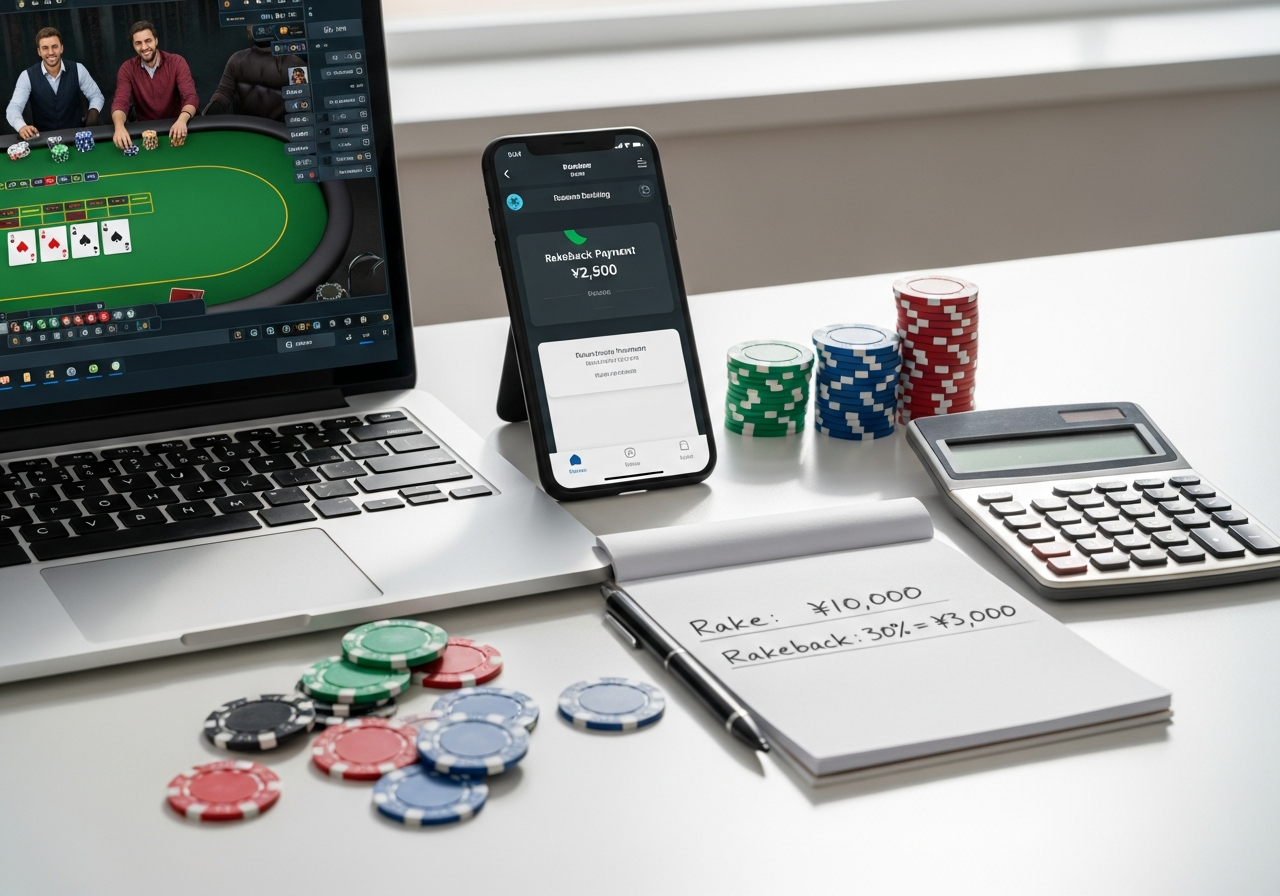
Effective rakeback is the real percentage you actually earn after all conditions, caps, and fees are accounted for. Calculate it by dividing the cash you received in rakeback over a month by the total rake you paid that month. If you paid ₹10,000 in rake and received ₹2,500 in rakeback, your effective rakeback is 25%, regardless of what the headline says.
Game volume is the number of hands or hours you can play per day at a given room. A room with 50 tables running 24/7 allows more volume than one with 10 tables. Higher volume directly increases your rakeback earnings.
Rake cap is the maximum rake the room will collect per hand or per day. If the cap is ₹50 per hand and the average pot in your game is ₹500, the room is collecting 10% rake up to the cap, then 0% on the remainder. This limits your rakeback potential.
Release speed tells you how quickly you can access your rakeback. Instant or weekly release is better than monthly; monthly is better than quarterly. Delayed releases reduce your effective return because you can’t reinvest the money immediately.
Rakeback in India: Site Types and Payment Considerations
Indian poker players have three main options: centralized poker rooms (often offshore), crypto-based platforms, and private clubs. Each has a different rakeback structure and payment model.
Poker Rooms, Clubs, and Crypto Platforms
| Platform type | Typical rakeback style | Main advantage |
|---|---|---|
| Centralized offshore rooms | Tiered VIP with 20–40% rakeback; weekly or monthly payouts; multiple deposit/withdrawal options. | Stable, regulated (in their jurisdiction); large player pools; transparent terms. |
| Crypto-based platforms | 30–50% rakeback; real-time or daily payouts; paid in crypto; often include rake races and leaderboards. | Fast payouts; no banking friction; high rakeback percentages; appeals to tech-savvy grinders. |
| Private clubs (India-based) | Highly variable (15–50%); often paid in cash; negotiated directly with operator; may include merchandise or membership benefits. | Highest rakeback potential if you have a good relationship; no online platform risk; direct payout. |
Centralized offshore rooms are the most established option for Indian players. They accept Indian bank transfers and UPI, offer stable software, and have large player pools. Rakeback is transparent and paid on a fixed schedule. The downside is that payout speed can be slower, and you’re reliant on the room’s banking partners.
Crypto platforms have exploded in popularity among Indian grinders in recent years because they offer higher rakeback percentages, faster payouts, and no banking delays. The trade-off is volatility: if you earn rakeback in Bitcoin and the price drops 20% before you convert it to INR, your real earnings drop accordingly.
Private clubs offer the highest rakeback potential if you can negotiate directly with the operator. However, they carry higher risk: no regulatory oversight, potential disputes over payout terms, and the risk that the club shuts down or the operator disappears.
Why Payout Timing and Fees Matter
A ₹10,000 rakeback payment received today is worth more than ₹10,000 received in 30 days, because you can reinvest it immediately. If your room pays rakeback weekly and you earn ₹2,000 per week, you can put that money back into your bankroll or withdraw it. If another room pays monthly, you wait four times longer to access the same amount.
Withdrawal fees are equally important. Some crypto platforms charge 1–3% to convert rakeback from their native token to stablecoins or fiat currency. If you earn ₹5,000 in rakeback and pay ₹250 in fees, your effective rakeback drops by 5%. Over a year, that compounds significantly.
Exchange rates and conversion friction also matter. If you’re playing on a crypto platform and earning rakeback in USDT (Tether), you need to convert it back to INR to use it. If the platform’s exchange rate is 2% worse than the real market rate, that’s a hidden cost.
Rakeback Strategies for Recreational Players and Grinders
Your approach to rakeback should depend on how much you play and what your goals are.
- Recreational players (10–20 hours per month): Focus on rooms with low rake, not high rakeback percentages. A room with 3% rake and no rakeback might be better than one with 5% rake and 40% rakeback. Rakeback won’t be your primary earnings source, so choose based on game quality and soft player pools first.
- Semi-serious players (40–80 hours per month): Rakeback becomes meaningful at this volume. Look for rooms with 25–35% rakeback, tier progression, and weekly payouts. You should expect to earn ₹2,000–5,000 per month in rakeback depending on stakes and game selection.
- Full-time grinders (200+ hours per month): Rakeback is a major component of your income. Prioritize rooms with 35%+ rakeback, fast payouts, and low rake caps. At this volume, a 5% difference in effective rakeback can mean ₹5,000–10,000 per month in lost earnings.
- Multi-room players: Play at 2–3 rooms to diversify game selection and take advantage of different rakeback structures. Some rooms run better games at certain times; others have better rakeback. Spreading your volume can increase your effective rakeback across all rooms.
How to Maximize Value Without Chasing Bad Games
The biggest mistake grinders make is chasing high rakeback by playing in soft, low-volume games or at stakes above their skill level. If a room offers 50% rakeback but the games are full of strong regulars, you’ll lose money faster than you earn it in rakeback.
Always prioritize game selection first. Play in games where you have a clear edge: loose, recreational players; high variance; soft blinds. Only then consider rakeback. A 20% rakeback in a soft game beats 40% rakeback in a tough game every time.
Second, play a sustainable volume. If you’re grinding 200 hours per month to earn rakeback, but you’re exhausted and making poor decisions, you’re losing money in the long run. Rakeback should reward your natural play, not incentivize unsustainable volume.
Third, track your actual earnings. Use a poker tracker or spreadsheet to record rake paid, rakeback earned, and effective rakeback percentage. This data helps you identify which rooms and stakes are most profitable for you.
Common Mistakes Indian Players Make With Rakeback
Mistakes That Reduce Real Returns
- Overvaluing headline percentages: A room advertising 50% rakeback sounds better than one offering 25%, but if the 50% room has a ₹50 daily rake cap and pays monthly, while the 25% room has no cap and pays weekly, the 25% room might generate 3x more real earnings.
- Ignoring rake caps: Many rooms limit the rake you can generate per hand or per day. If you’re playing high-stakes games and hitting the cap frequently, your effective rakeback drops significantly. Always ask about rake caps before committing to a room.
- Misunderstanding bonus release conditions: Some rooms offer high rakeback bonuses, but they’re locked until you clear a bonus wagering requirement at unfavorable terms. Read the terms carefully and calculate whether the bonus is actually worth the effort.
- Playing only for rakeback: If you’re only playing because of rakeback, you’re likely in a game above your level or with weak fundamentals. This is the fastest way to go broke.
- Not tracking effective rakeback: If you don’t calculate your actual rakeback percentage, you can’t compare rooms fairly or identify when you’re being shortchanged.
Risk Checks Before You Sign Up
Before joining any poker room or club, verify the following:
Check the terms and conditions for rakeback. Confirm the exact percentage, payout frequency, and any caps or release conditions. If the terms are vague or hidden, that’s a red flag.
Verify payout rules and withdrawal methods. Can you withdraw rakeback to your bank account, or only to a wallet or back into your poker account? How long does withdrawal take? Are there fees?
Research support quality. Read reviews on Reddit, Twitter, and poker forums. If players report delayed payouts or unresponsive support, avoid the room.
Check for jurisdictional restrictions. Some rooms restrict Indian players or require additional KYC steps. Confirm you’re eligible before you deposit.
A Simple Framework to Compare Rakeback Offers
Use this framework to evaluate any rakeback offer and make a data-driven decision.
| Criterion | Weight | What to check |
|---|---|---|
| Effective rakeback percentage | High | Calculate real rakeback earned ÷ total rake paid. Target 20%+ for regular play; 30%+ for serious grinding. |
| Game quality and volume | High | Are there soft games running 24/7? Can you find tables at your stakes? Check the lobby or ask support before depositing. |
| Rake structure | Medium | What is the base rake percentage? Is there a cap per hand or per day? Lower base rake is often better than higher rakeback. |
| Payout frequency and speed | Medium | Weekly or faster is ideal. Avoid rooms that pay monthly or hold rakeback for 30+ days. |
| Withdrawal options and fees | Medium | Can you withdraw to your bank account or wallet? Are fees <2%? Avoid rooms with limited or expensive withdrawal methods. |
| Tier progression and bonuses | Low | Do you earn bonus rakeback by climbing tiers? Are there rake races or seasonal promotions? These add value but shouldn’t drive your decision. |
| Platform stability and support | High | Does the room have a good reputation? Is support responsive? Check reviews and ask other players. |
Decision Rules for Choosing the Best Offer
Start by comparing effective rakeback across your shortlist of rooms. Calculate it based on recent player data or your own play if you have historical data. Aim for 20%+ if you’re a recreational player, 25–30% if you’re semi-serious, and 30%+ if you’re a full-time grinder.
Next, evaluate game quality independently of rakeback. Play a few sessions at each room and assess whether the player pool is soft enough for you to win consistently. A 10% edge in a soft game beats a 5% rakeback in a tough game.
Then, calculate the net payout value. Factor in withdrawal fees, conversion costs, and payout delays. If Room A offers 30% rakeback but charges 3% withdrawal fee and pays monthly, while Room B offers 25% rakeback with no fees and weekly payouts, Room B’s real value is higher.
Finally, assess long-term sustainability. Choose rooms with stable software, responsive support, and a good reputation. A room with 40% rakeback that shuts down unexpectedly is worth nothing. Prioritize rooms that have been operating for 2+ years and have a solid player base.